

Global Freight Market Update – April 2026
Overview
Global Freight Market Update – April 2026
April conditions reflected tightening capacity and rising cost pressure across air, ocean, and U.S. ground markets, with geopolitical disruption and fuel volatility remaining the dominant risk factors.
Global freight markets in April 2026 were shaped by persistent geopolitical disruption, higher fuel costs, and uneven demand recovery. International air cargo capacity remained constrained following Middle East airspace closures, with partial recovery still well below expected levels and fuel-driven cost inflation pushing yields higher. In ocean freight, the prolonged closure of the Strait of Hormuz continued to force rerouting, emergency surcharges, and blank sailings, adding complexity and unpredictability to total landed costs despite relatively stable underlying demand. U.S. domestic ground markets showed tightening capacity conditions, particularly in truckload, as carrier exits and regulatory pressures offset muted volume growth and pushed rates modestly higher.
Policy developments added another layer of focus for shippers, with U.S. Customs and Border Protection outlining a formal process for IEEPA tariff refund requests, creating a potential cash recovery opportunity for eligible importers. Across all modes, the operating environment favored proactive planning, closer carrier engagement, and careful cost management as markets adjusted to a higher cost baseline.
- Global air cargo capacity fell sharply following Middle East airspace closures, with losses exceeding 520,000 tonnes over a two-week period and capacity still operating about 10 percent below expected levels.
- Elevated and volatile jet fuel prices established a higher cost baseline, driving fuel surcharge increases of roughly USD 1.00 per kilogram in total transportation costs.
- Yield pressure intensified as demand exceeded available capacity on many long-haul lanes, challenging the profitability of fuel-inefficient aircraft.
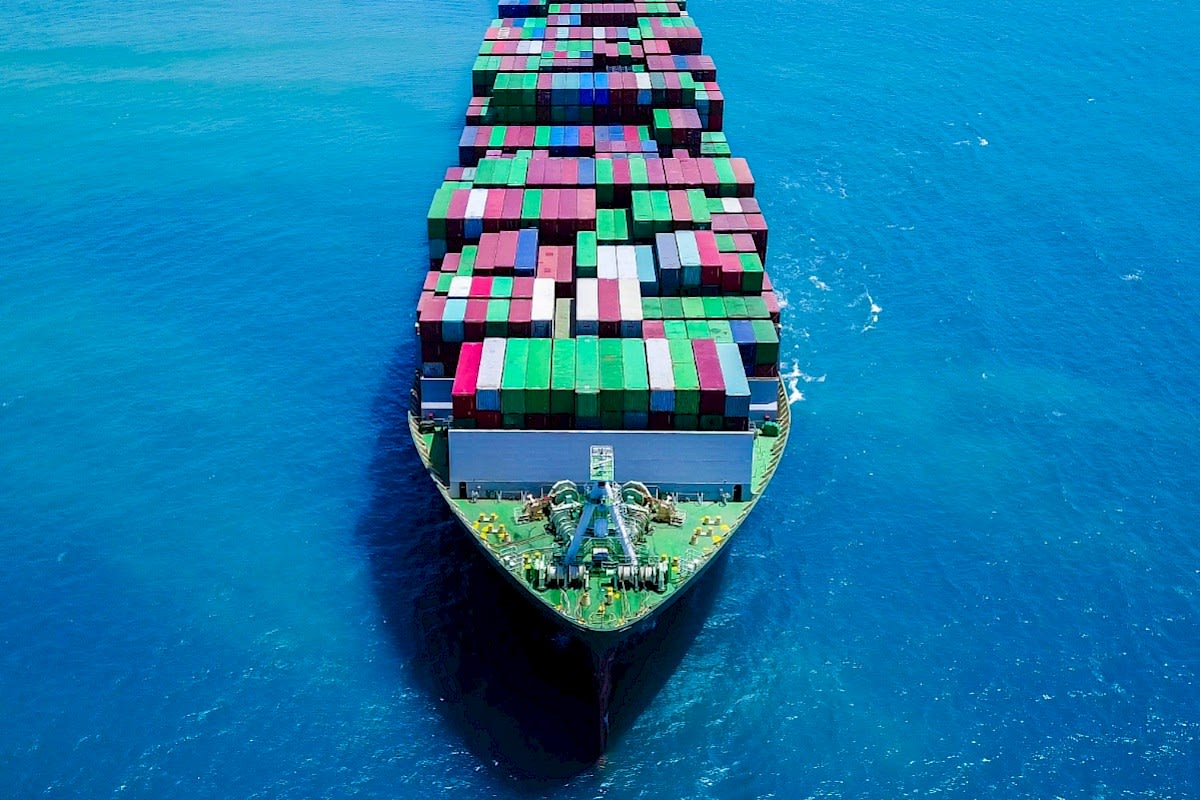
- The ongoing closure of the Strait of Hormuz continued to disrupt global container networks, prompting rerouting, blank sailings, and widespread emergency fuel surcharges across trade lanes.
- Surcharge complexity increased as costs extended beyond the ocean leg into inland and intermodal segments, reducing the predictability of total landed costs.
- Carriers are preparing for blank sailings, service cancellations, and continued Cape of Good Hope routings. A return to Red Sea/Suez routes is unlikely without a lasting peace agreement.
- Truckload capacity tightened despite muted demand, driven by ongoing carrier exits and regulatory pressures, with tender acceptance rates reported in the low-80 percent range.
- Contract truckload rates showed modest year-over-year growth, while spot rates rose more sharply as capacity constraints lifted pricing.
- Flatbed demand remained seasonally strong, with load-to-truck ratios rising materially and equipment availability continuing to decline.
- U.S. Customs and Border Protection announced a formal process for submitting IEEPA tariff refund requests, providing a structured path for eligible importers to seek duty recovery. Read more...
- The ongoing Middle East conflict continued to drive trade compliance and landed cost uncertainty through sanctions risk, routing changes, and fuel-related surcharges. Read more...
Solution Spotlight: CAPE Declaration Support Services
Crane Worldwide Logistics provides CAPE Declaration Support Services to help importers identify and pursue eligible IEEPA duty refund opportunities. Our team supports end‑to‑end execution, including eligibility assessment, data validation, submission preparation, and audit‑ready documentation. This approach reduces administrative burden while helping organizations manage compliance risk and recover duties in an increasingly complex regulatory environment. To get started, submit a request to our Tariff Response Unit to receive dedicated support with CAPE and IEEPA refund filings.
Turn market intelligence into action
Talk with a Crane expert about capacity, routing, and trade-policy risks affecting your supply chain.