


Crane Developer Portal
Connect your systems to Crane
Build direct connections to Crane transportation and warehouse operations through APIs, EDI messaging, and event-driven data exchange.
Transportation APIs · Warehouse APIs · EDI standards
One connection across your supply chain
Connect internal systems with Crane transportation, warehouse, and consolidation applications. Exchange operational information without relying on duplicate entry or disconnected files.
- Track shipments, milestones, exceptions, and containers
- Create and monitor purchase and sales orders
- Retrieve invoices, shipment documents, and inventory information
Transportation API capabilities
The Crane API reference includes real-time, on-demand access to transportation records. The current public specification documents shipment, container, document, and invoice workflows.
Shipment visibility
Retrieve in-transit shipments, exception shipments, mode counts, and shipment detail by reference number.
Connected records
Resolve reference types, inspect container information, list shipment documents, and download authorized files.
Financial context
Retrieve invoice details connected to a shipment reference.
Real-time events
Use operational APIs alongside event-driven notifications to keep internal workflows current.
Warehouse API capabilities
Connect order and inventory workflows directly with Crane warehouse operations. The public specification covers inbound and outbound execution as well as the master data needed to support fulfillment.
Inventory
Retrieve detailed inventory information for connected warehouse programs.
Orders
Create purchase and sales orders and retrieve order details.
Receiving
Access goods-received and shipment-confirmation information.
Materials
Create material records used by supported warehouse workflows.
EDI integrations
Crane can consume and create standardized EDI documents across transportation and warehousing. The reference library combines implementation guidance with sample messages to help integration teams plan mappings and testing.
Transportation messages
Standards include 204 load tender, 990 tender response, 214 shipment status, 300 ocean booking, 315 ocean status, and air, ground, and ocean invoice messages.
Warehouse messages
Order import, material import, and milestone export specifications support receiving, fulfillment, and inventory workflows.
Implementation samples
The technical library includes EDI samples plus XML and XSD examples for supported warehouse exchanges.
Coordinated onboarding
Sales, technology, operations, product, and implementation specialists collaborate on integration delivery.
Secure access from test to production
API customers register for access, request a key, and begin development against Crane's test environment. Production access follows validation of the completed integration.
- Separate test and production access
- Secure API-key authentication
- Standard HTTP status and error responses
- Paginated responses for supported collection endpoints
Connectivity designed for trading partners
Crane supports established B2B connectivity patterns, including HTTPS, SFTP, and AS2. Exact test and production endpoints, identifiers, and current certificates remain in the controlled connectivity profile so implementation teams always use the operational source.
A clear path to launch
Start with the business events and records your teams need to exchange. Crane's integration specialists then align the interface, environment, testing, and production-readiness plan.
1. Define
Confirm systems, business processes, message direction, data requirements, and success criteria.
2. Connect
Register for API access or establish the agreed EDI transport and partner configuration.
3. Validate
Test mappings, authentication, responses, exceptions, and end-to-end operational scenarios.
4. Launch
Complete production approval, exchange live data, and establish the ongoing support path.
Related Technology
Connected platforms and programs
Other Crane technology products that complement this platform.
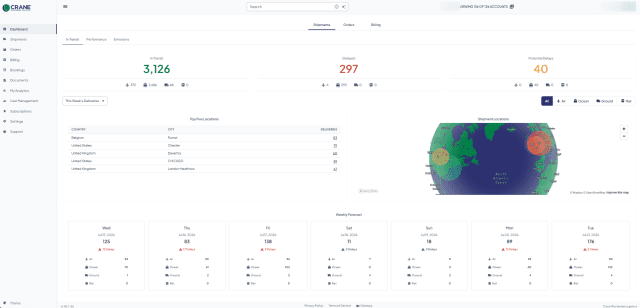
Visibility Platform
C-View Supply Chain Visibility
Connected visibility across shipments, orders, materials, billing, documents, emissions, analytics, and exceptions.
- Connected records
- Manage exceptions
- Analyze performance

Warehouse Management
Crane WMS
Warehouse Management System (WMS) capabilities supporting inventory visibility, receiving, putaway, picking, packing, and outbound operations.
- Inventory visibility
- Warehouse workflows
- Inbound and outbound operations
Related integration insights
Articles on trade terms, technology partnerships, and digital supply chain connectivity.
View all insights →
Industry Insight News
Aug 14, 2019
Microsoft's CEO highlights Crane Worldwide as an AI first company.
Now a major player in the global logistics industry Crane Worldwide Logistics has invested in new technology using Microsoft's 365 for Sales alongside LinkedIn Sales Navigator to increase customer engagement data.
Read insight ->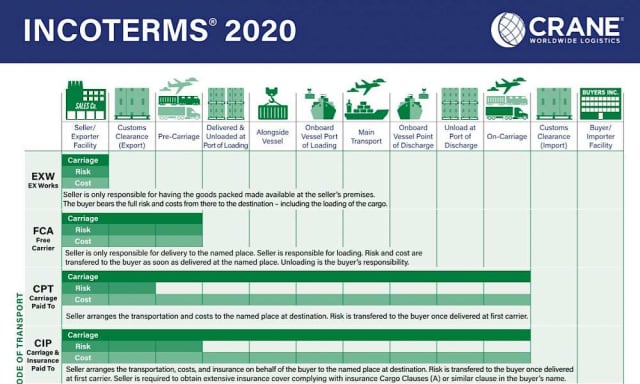
Industry Insight News
Jan 10, 2020
Incoterms® 2020 PDF - Download chart now - International Trade Regulations - Latest Version
All you need to know about Incoterms...
Read insight ->