

Overview
At Crane Worldwide Logistics, we are equipped to navigate the changes to best support our clients. We will continue to monitor the situations globally to keep you informed.
To see our previous updates, please visit our COVID-19 Resource Center. For the latest on Brexit, follow this link.
Many countries have entered lockdown; however, all our facilities and warehouses are still operational. We have warehouse space available, ground transportation options globally, book air charters, and fill space on ocean carriers.
- Supply and Demand will be in greater balance for the next three years. As a result, freight rates will remain at a high level. Lower than Q4 2020 but much higher than May 1, 2020 levels.
- Accurate Demand planning should be the number 1 priority of shippers if they want to have supply consistency.
- VOCC will continue to balance supply with demand as needed.
- Expect further investment in ocean containers made by the ocean carrier community in 2021.
- Expect schedule reliability to average around 67% on time for the first half of 2021.
- Do not expect the costs associated with marine diesel at this moment to be relatively stable. However, the gap between Low Sulphur and High Sulphur's cost continues to show the gap widening in January 2021, with Low Sulphur outpacing High Sulphur. Between April 2020 through November, the costs were about the same.
- Extended equipment detention free time is for the new contracts remains unlikely as carriers seek to turn equipment much faster.
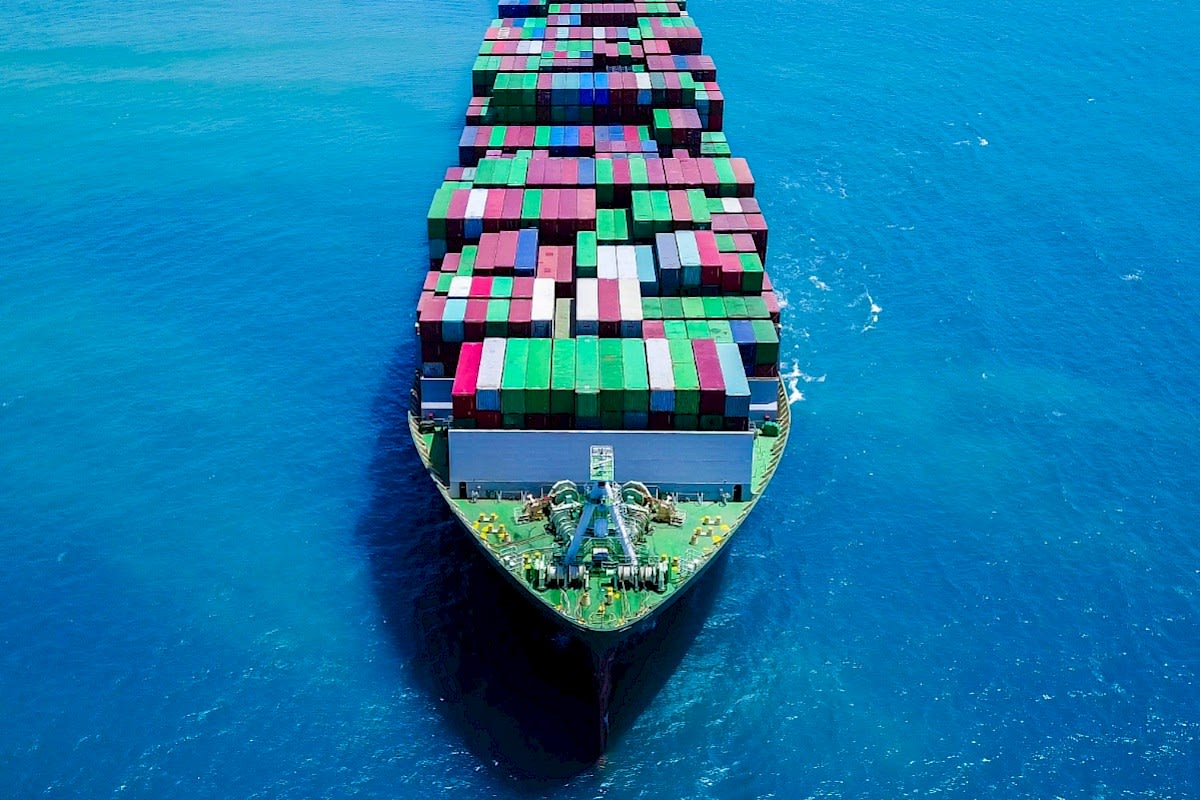
As of Wednesday, 3rd February, 638 containers have been discharged from the ONE APUS at the port of Kobe, Japan. Progress is still relatively slow. Details for lost and damaged containers are still unavailable.
- Prince Rupert and Vancouver: Vessel wait time is 3-4 days, Port delays are an additional 2-4 days.
- Seattle: Fri 2/19 – T18 and T30 all day closed.
- Oakland: Vessel wait time is 3 days. Nearly 20 vessels waiting to discharge, including 11 container ships.
- Los Angeles / Long Beach: ul> li>Fri 2/26 – ETS, PCT, TTI, and YTI 2nd shift closed. ul> li>The vessel wait time is 10+ days. Over 40 vessels waiting to discharge, including nearly 30 container ships. 25 container ships are berthed.
- IPI On Dock Rail delayed 7+ days.
- Major Chassis shortages, delaying MLB/Doors, average LALB MLB dwell is 3+ days, some stragglers aging to 7+ days.
- Cargo is buried, expediting containers from any terminal after discharge is quite difficult.
- Due to continuing stay-at-home-orders for the LALB area due to hospitalization surge, delays for vessels, rail, and trucking are expected to increase significantly over the next 3 weeks.
IATA released an information page listing airlines' status globally, which is free for all to access. Visit the page here.
Charter Operations and Aircraft Availability
What charters do Crane Worldwide Logistics have available?
- Capacity is available for charters globally. Contact us for current rates and availability.
- If you have an opportunity, send us the details, and we can work on the current part charter capacity and pricing. Charter prices are based on current availability, and that could change rapidly. Size and rates have been fluctuating a lot over the past few days.
- Crane Worldwide Logistics must have a signed charter authorization from our client before signing the charter contract with the provider. Make sure you have someone standing by to sign agreements; capacity and rates change quickly.
- On all charters, funds must be received from our client before wheels up.
- Air Bridge Cargo - Airbridge Cargo (ABC) has deployed its first 777 freighter, putting it on the Trans-Siberian route with a payload of 106 tons. “2020 has put air cargo at the front,” said Igor Borisov, director of Moscow’s Domodedovo Airport, “delivering much-needed medical cargo – PPE, vaccines, medicines, medical equipment and other items to combat Covid-19 spread. “We are positive that the new freighter type within Airbridge Cargo’s fleet will open new opportunities for other carriers operating to/from Domodedovo.”Customer Natalia Butrova, logistics leader Russia & CIS at GE Healthcare, added: “Timely delivery of sophisticated medical equipment stays one of the top tasks during these difficult times. Time-wise, airfreight is the most preferred mode, which, coupled with safety and security, is very important for us.”
- Air Canada - will sell two passenger Boeing 767s to be converted into freighters before leasing them back as it targets growth in air cargo. The Montreal-headquartered company will sell two of its B767-300ER aircraft to ATSG-owned lessor Cargo Aircraft Management (CAM).The first aircraft will be inducted for conversion in March 2021. Both are expected to be redelivered to Air Canada by the end of 2021. This is the first sale-leaseback agreement between ATSG and Air Canada. In November 2020, Air Canada announced its plan to use converted freighters to grow its cargo business in response to “evolving opportunities in the airfreight market”. “Getting these two [Boeing] 767 freighters into our operation in 2021 is aligned with our announcement in November,” said Jason Berry, vice-president of cargo at Air Canada. “We are excited to be in a position to capture the market opportunities that currently present themselves. Delivering on our commitments is critically important to all of us at Air Canada. “The aircraft will be converted by Israel Aerospace Industries (IAI) of Tel Aviv, Israel. “It is always a great feeling to gain a new lease customer and we are proud to be able to again support a great airline like Air Canada,” said Mike Berger, chief commercial officer of ATSG. “We are looking forward to delivering these airplanes and extending our special partnership with Air Canada. “We continue to see growth outside of the US, and ATSG continues to enable great companies to take advantage of growing global e-commerce and mobile-commerce trends. “Like most carriers, Air Canada has seen cargo become an increasingly important part of its business as a result of the Covid-19 outbreak as passenger demand dropped and cargo revenues increased.
- Brexit aftermath - As Britain officially leaves the European Union bloc and the UK citizens become third-country nationals, confusion rises in the airports around Europe. Spain denies entry UK citizens flying to their homes in Spain have been stopped from boarding a joint British Airways-Iberia flight to Madrid as the carrier claimed their pre-Brexit residency papers were no longer valid. In an effort to contain the new COVID-19 mutation, Spain has banned all but Spanish nationals and residents flying from the UK to Spain on December 22, 2020. Even if the UK passengers had the green card as a proof of residency, some were still denied boarding the flight. “This should not be happening, the Spanish authorities have reconfirmed again this evening that the green residency document will be valid for travel to return to Spain as stated in our travel advice,” British Embassy in Madrid wrote in a tweet. Iberia issued a statement explaining that on January 1, 2021, it had received an email from border police ordering it to not recognize the proof of legal residency in Spain as a British national. However, the next day it received another one, confirming that documents could in fact be used, if they are not expired. Around 300,000 British citizens are registered as permanent residents in Spain. Other EU countries follow On January 1, 2021, thirteen British nationals were stranded at Amsterdam Schiphol Airport (AMS) as they were subject to the third-country coronavirus regulations and their trips were not essential, according to a Dutch border force spokesman Robert van Kapel. People from safe countries are allowed to pass, but the UK is certainly not a safe country right now,” Van Kapel said. He added that some travelers were going on a visit to Amsterdam or for a skiing holiday. “That’s just not the intention now,” Van Kapel said. Germany banned the flights from the UK on December 20, 2020 and extended it to January 6, 2021. Travelers from the UK with a proof of residency in Germany could enter the country from January 1, 2021. However, a number of British citizens were banned from the entry into Germany, as Lufthansa (LHAB) (LHA) did not accept their residency permits. A spokesperson from Lufthansa (LHAB) (LHA) said that apart from a few difficulties “the vast majority of travel by air from and to the UK is still running smoothly “Travelers on the Ryanair flight to Pisa, Italy, also reported similar issues. The exact number of flights and passengers affected has not been released by the UK Foreign Office, reported the BBC News. ul> li>Post-Brexit changes Since the end of the Brexit transition period on January 1, 2021, Britons can travel to the EU only with a valid reason and if they have at least six months left on their passport. They are also no longer eligible to use the EU fast-track passport control. A passenger must be ready to present the return ticket and proof of their sufficient finances while staying in the EU country. On December 24, 2020, the EU and the UK came to a last-minute agreement on trading relationships, avoiding the no-deal scenario. The new Brexit trading rules, which are supposed to ensure direct air connectivity between the two parties, came into force on January 1, 2021.
- Canada - Two Air Transat flights from Haiti to Montreal were potentially carrying enough infected travelers to put all passengers at risk of COVID-19. The Canadian government uses tracking system Health Canada to inform the passengers who have been potentially exposed to the virus while traveling. Usually the specific rows are identified and passengers are advised to take precautionary measures. After Air Transat flights TS663 on January 10, 2021, and TS665 on January 13, 2021, landed in Montréal-Pierre Elliott Trudeau International Airport (YUL) with several COVID-19 cases, Health Canada informed that all passengers in all rows were potentially exposed to the virus. Initially Health Canada listed affected rows on both flights as “unknown.” On January 15, 2021, the flight status was updated to “all rows,” as reported by the Toronto Sun. The Air Transat operated both flights on wide-body Airbus A330s, which can seat up to 375 passengers. However, the exact number of passengers on the flights is not announced. On January 7, 2021, Canada imposed the requirement of a negative COVID-19 test for all inbound passengers, in order to tackle a surge of new cases and the novel variant of the virus originating from the United Kingdom. However, Haiti was excluded from the new requirement. Due to the limited testing capacity, passengers arriving to Canada from Haiti are not required to show a negative test result. Since the new requirement was introduced, 72 international flights carrying COVID-19 infected passengers have landed in Canada. On January 15, 2021, the Canadian Prime Minister Justin Trudeau said he was not excluding the idea of international flight ban. “We're doing whatever it takes to protect Canadians, including looking at banning certain flights if necessary,” said Trudeau. “Decisions must be made based on public health guidance.”
- Canada continued To tackle a surge of COVID-19 cases and the new strand of the virus originating from the United Kingdom, Canada will soon make negative tests mandatory for airline passengers to enter or return to the country. The screening test must be taken no more than 72 hours before arrival at Canada's airports, harbors, or at border posts by land. The exact deadline for the enforcement of this new measure was not disclosed, though according to Dominic Leblanc, Canadian Minister of Intergovernmental Affairs, it should be soon. “If I was on a Caribbean beach this week, I would look for a clinic to do a screening test before I returned to Canada,” Leblanc told Radio Canada. The requirement for a quarantine of 14 days upon arrival remains in force. The National Airlines Council of Canada, which regroups the four largest airlines of the country, namely Air Canada (ADH2), Westjet, Air Transat, and Jazz Aviation, reacted to the announcement. “Today's announcement was made without prior coordination with industry, and with many important operational and communications details yet to be determined,” the Council objected. “Major Canadian airlines have invested millions of dollars to protect the health and safety of our passengers and employees, and to protect public health.”
- Cathay Pacific - New measures against the spread of Covid-19 infections in Hong Kong could cost Cathay Pacific up to a quarter of its cargo capacity. The Hong Kong authorities are planning a 14-day quarantine and seven-day medical surveillance mandate for flight crews returning to the territory after a layover abroad. So far, flight crews have been exempt from Hong Kong’s quarantine rules, but the new regime is planned to come into effect sometime next month. The impact on Cathay will be severe. Management estimates it could affect as much as 60% of its passenger capacity and 25% of cargo capacity. The financial repercussions could raise its monthly cash burn by HK$400m (US$51.6m) to as much as HK$1.9bn. The new measure will have a significant impact on our ability to service our passenger and cargo markets. The actual extent of such impact is yet to be confirmed and will be affected by a number of factors, including the success of mitigation measures we are able to adopt, such as agile manpower resources management,” said group chief customer and commercial officer Ronald Lam. Cathay’s management is looking at ways to mitigate the impact of the new rules. One possible scenario is to set up complex sets of flights to create a closed loop that would see crews on travel for three weeks, followed by the quarantine period and a subsequent break.
- Cathay Pacific - Cathay Pacific Cargo has announced a new scheduled freighter service between Hong Kong and Riyadh, starting tomorrow, with a 747-400ERF operating every Tuesday via Dubai. The airline said it had “seen a growing demand for air cargo flights between Saudi Arabia and Hong Kong. These new flights will meet the strong demand for shipments of e-commerce and other general cargo such as garments”.
- In addition Lufthansa Cargo has imposed security charges for all cargo departing the UK on road feeder services (RFS) for onward flights out of its European hubs. Following Brexit, EU law no longer recognizes trucked cargo from the UK as secure, and requires such goods to undergo rescreening before onward flights. Lufthansa told customers their cargo departing the UK via RFS would be subject to ‘security charges for unknown cargo’ of £0.15/kg ($0.20), or a minimum of £17.25. The carrier said: “We are legally obliged to follow this new ruling,” adding it would be “voicing our concerns to the respective EU ministers”.
- Although Lufthansa and thus far Cargolux appears to be the first carriers to publish details of additional charges, there are expectations more carriers will. The Loadstar approached Air France-KLM Cargo to ask if it would impose similar surcharges, but the carrier did not respond before publication.
- Emirates - On January 11, 2021, Dubai air carrier Emirates announced its plan to expand operations in the United States amid increased air travel demand. Emirates currently serves 114 destinations on six continents. Emirates will re-launch non-stop operations to Seattle from February 1, 2021, Dallas and San Francisco from March 2, 2021, growing its North American network to 10 destinations. Flights to/from Seattle (four weekly flights) and Dallas (three weekly flights) will be operated with two-class Boeing 777-200LR aircraft. Four weekly flights to/from San Francisco will operate on Boeing 777-300ER aircraft, following the resumption of services to Boston, Chicago, Houston, Los Angeles, New York JFK, Toronto and Washington DC. Dubai carrier Emirates will also be providing additional flights to New York, Los Angeles and Sao Paulo. Effective February 1, 2021, Emirates will be operating double daily flights to John F. Kennedy International Airport (JFK) and a daily flight to Los Angeles (LAX). In South America, Emirates will be introducing a fifth weekly flight to Sao Paulo from February 5, 2021.
- Fed-ex - plans to cut jobs in Europe and combine air networks as part of the integration of TNT. The US logistics giant acquired TNT for €4.4bn in 2016 as part of its European expansion plans and has been integrating IT systems and air, road and ground networks since then. The company will now address the duplication of roles and presented its plans to European employee representatives and team members yesterday. These proposals will regrettably have a “workforce impact” of between 5500 to 6300 people across operational teams and back-office functions, FedEx said. “In the course of these consultations, the full range of support measures for affected team members will be discussed with works council representatives from across the region,” the company stated in a press release. “These measures differ by country and may include voluntary redundancy, reassignment to other roles and priority access to open positions. “The consultation process will take place over an eighteen-month period in line with local country processes and regulations.”
- Hainan Airlines - Parent company HNA Group applied for bankruptcy and reorganization after a long period of financial struggles. “The relevant creditors applied to the court for bankruptcy and reorganization of our group because our group could not pay off their due debts,” HNA Group statement reads. The group will cooperate with the court to conduct judicial review and will actively promote debt disposal work, and support the court to protect the legal rights and interests of creditors in accordance with the law to ensure the smooth progress of enterprise production and operation, according to the statement. In February 2020, Chinese authorities stepped in to run one of the largest conglomerates in China, as it struggled to overcome the debt crisis made worse by COVID-19 crisis. The move was made at HNA’s request, according to the statement. HNA Group once attracted global attention for its aggressive spending including a stake in hotel giant Hilton Worldwide Holding and Deutsche Bank. However, the Group indebted after liquidity issues emerged in 2017.The latest financial report it published, covering the first half of 2019, showed that the company had 706.7 billion yuan ($109 billion) of debt. Hainan-based private conglomerate HNA Group was founded in 1993. It held a stake of 14 airlines and retained a fleet of 900 aircraft.
- IAG - has carried more than 1m Covid-19 vaccines to destinations in its global network. The carrier said some vaccines have been transported from its facilities at London Heathrow to North America and Europe. In addition, 80,000 doses were flown from its Madrid hub to the Canary Islands. It also shipped the Moderna vaccine from Dublin and Gran Canaria vaccines were all transported using IAG Cargo’s Constant Climate pharma service, which supports the movement of millions of temperature-sensitive pharmaceutical goods every year. John Cheetham, chief commercial officer at IAG Cargo, commented: “I am delighted that we have already successfully transported more than 1m doses of Covid-19 vaccines around the world. ”Since the start of the pandemic in March, more than three quarters of our 1,000 charters in 2020 were used to transport thousands of tons of crucial medical supplies, PPE and ventilators. “We remain committed to continuing to offer our expertise to help support the fight against Covid-19 during 2021.”IAG cargo has more than 100 approved stations supported by pharma specialists. In addition, its London Heathrow hub is GDP-certified and WDA licensed by the UK’s MHRA (Medicines & Healthcare Products Regulatory Agency).In 2019, IAG Cargo opened a new hub centre in Madrid dedicated to handling temperature-sensitive pharma goods.
- Qatar - Qatar Airways Cargo took delivery of three 777 freighters on 1 January, bringing its freighter fleet to 30, of which 24 are 777Fs, four are A330Fs and two 747Fs. The airline said the new aircraft would be put on long-haul scheduled routes, as well as be open for cargo charters. “We are injecting much-needed capacity in the market, helping support global supply chains at a critical time during the pandemic,” said group chief executive Akbar Al Baker. “The added capacity will enable us to support logistics around the Covid-19 vaccination, which is projected to be one of the greatest logistical challenges for the industry. “Qatar noted that it had also temporarily converted six of its 777-300ER aircraft to operate cargo-only flights, introducing an additional 137 cubic meters of cargo volume per flight over the lower deck cargo capacity of 156 cubic meters.
- United Airlines - United Airlines looks to mandate COVID-19 vaccination for its employees and calls for other companies to follow its lead. The Chicago-based carrier wants all of its 60,000 staff to be vaccinated for COVID-19, Chief Executive Scott Kirby told employees on January 21, 2021. Kirby believes it would be the best practice to require vaccines from the airline’s employees and said United would be among the first wave of companies to require vaccines, if other companies follow. “Because I have confidence in the safety of the vaccine, and I recognize it’s controversial, I think the right thing to do is for United Airlines, and for other companies, to require the vaccines and to make them mandatory,” said Kirby to CNBC. Other US carriers are not as determined to instill the mandatory vaccination. Delta Air Lines is working for the aviation employees to be considered as front line workers to receive the vaccine earlier in the rollout and Southwest is encouraging employees to be vaccinated. Meanwhile American Airlines (A1G) (AAL) said the company is not planning on following United’s idea of mandatory vaccinations. “We do not plan to require our team members to receive the vaccine unless vaccinations are ultimately mandated for entry to certain destinations,” a spokesman for American Airlines (A1G) (AAL) said.
- Winter weather drove spot volume activity to extreme levels. Seasonally adjusted freight spot increased about 9% from what had been the post-pandemic high. The Dry Van segment rose more than 29% from the prior week’s post-pandemic high. The index shows seasonally adjusted volume at more than three times the pre-pandemic baseline with outbound tender volume up 34% over the previous year. Although the weather was a one-week impact, it will have a major impact on most freight networks for weeks to come. This is due primarily to the tight capacity conditions that existed prior to the storm. Usually during the winter, capacity is plentiful, and most networks are underutilized, allowing this type of disruption to be absorbed. With a meaningful number of trucks sidelined last week, freight piled up and it will take weeks to clear backlogs and accommodate demand.
- The national average for dry van outbound tender rejection rates increased from 19.69% to 24.72% over a one-week period after winter weather struck the Southwest, Midwest, Southeast, and Northeast. Shippers have experienced significant jumps in dry van rejection rates across the entire state of Texas, Louisiana, Arkansas, Missouri, Oklahoma, Tennessee, Illinois, Indiana, and Ohio as carriers shut their trucks down to avoid dangerous road conditions. As the storm passes, shippers should expect to see high volatility in spot rates for on-demand capacity until the freight backlog is delivered. According to FTR, “We expect volumes to rise quickly next week, but it will take some time for carriers to work through the freight disrupted by the storms. This will keep upward pressure on tender rejections and spot rates through the end of the month and right into the beginning of the spring freight season.”
- In the past week, the Los Angeles outbound tender rejection rate rose 4.1 percentage points, which is as large of an increase as the U.S. freight market overall, which is surprising given that the central and eastern U.S. has been dealing with very challenging weather conditions. During the past few days, the proportion of L.A. outbound to inbound freight has increased, which is reflected in its Head haul Index rising to 146 from just over 130 two days earlier. Cargo volume through the Port of Los Angeles rose 3.6% in January, marking the sixth straight month of year-over-year increases, port officials said this week. The port processed 835,516 twenty-foot equivalent units (TEUs) during the month, driven by strong imports and consumer spending. Port officials said they expect the flow of imports to continue in the months ahead, but they also noted that exports are lagging. “All indications point toward a strong flow of imports over the next few months as consumers continue an unprecedented buying surge, which began last summer,” Port of Los Angeles Director Gene Seroka said in a statement Wednesday. “However, U.S. exports continue to lag, down 25 of the last 27 months. What we’re experiencing is one-way trade, which has created challenges for the entire supply chain."
- Rail volumes saw a significant decline last week due to weather-related disruptions, rail volumes declined 17.6% y/y and 16.3% sequentially. Intermodal declined a little less after having gained almost 7% y/y the previous week. The Union Pacific has announced a 72 Hour pause on intermodal traffic this week.
- The American Trucking Associations’ estimate that the industry is short 60,000 drivers. The pandemic has reduced the number of CDL graduates by roughly 40%, and the Drug & Alcohol Clearinghouse sidelined roughly 56,000 drivers last year.
- The national average price of a gallon of diesel increased 9.7 cents to $2.973 cents a gallon, according to Energy Information Administration data released Feb. 22. ul> li>The price of a gallon of diesel has increased 17.2 cents in the past two weeks.
- Diesel now costs 9.1 cents more than it did at this time last year.
- Winter Storm Uri is currently blowing across the Southwest U.S. bringing hazardous winter conditions. As a result, United Cargo’s trucking operations are impacted causing delays among several stations as noted below. The following stations should expect significant trucking delays as a result of Winter Storm Uri through Tuesday, February 16: ul> li>ABQ – Albuquerque International Airport, Albuquerque, NM
- AUS – Austin-Bergstrom International Airport, Austin, TX
- DFW – Dallas/Fort Worth International Airport, Dallas/Fort Worth, TX
- IAH – George Bush Intercontinental Airport, Houston, TX
- LRD – Laredo International Airport, Laredo, TX
- MEM – Memphis International Airport, Memphis, TN
- MSY – Louis Armstrong New Orleans International Airport, New Orleans, LA
- Up-swinging demand for capacities.
- China demand for capacities is up as well as the rates into PVG.
- Biggest handling agent of Frankfurt Airport, called FCS (subsidiary of Fraport) is dealing with a COVID-19 outbreak within their warehouse facility.
- Container space out of China is critical into Germany, also rail and truck capacities are low! Also, vessels out of Germany into China and US are currently overbooked, current space bookable is 4 weeks.
- Cargolux has now been advised by the relevant EU department due to Brexit cargo transiting the UK via RFS to LUX is no longer part of the EU Security Regime. For this reason it must be screened again at Luxembourg.
- Stena doubling Rosslare-Cherbourg sailings due to post-Brexit demand.
- Rosslare Europort, which is operated by Iarnród Eireann, will have up to 30 direct services to and from Europe next year.
- We are seeing a huge shift away from UK Land bridge into mainland Europe.
- Air export to US has reduced significantly compared with peak rates at end of December.
- Rates to AP back down to pre-COVID levels, except for Australia.
- Import from AP still at a premium, pre Chinese New Year, with high volatility.
- Expecting to see effects of rates to ME following lifting of Qatar embargo
- Equipment problems have eased but still space restraints on both EB and WB export lanes. Increases announced for February transatlantic and to FE/ME. LATAM rates increased after many years.
- Import from FE not takings bookings locally, customers looking for space (the rate hikes have been accepted on the market).
- Space capacity slightly opening up, decrease in costs.
- The booking confirmation is subject to airline approval.
- Still require booking in advance.
- Flight schedule subject to change without further notice and transit.
- Space very still tight EU- Middle East & EU-Far East, Far East – EU.
- Container shortages resulting into additional fees implemented by carriers such as Equipment Imbalance fee.
- Rates Far East – EU at all record high level, expectations this will continue until Chinese New Year and the weeks after Chinese New Year.
- Congestion in the US Port such as New York and Los Angeles as well as inland Rail terminals in the USA.
- Timely booking, correct and longterm accurate forecast is key to ship in time.
- HL: Area Germany & Central Europe – Equipment Shortage 40´GP & HC – Temporary Booking Stop.
- HL: Equipment Imbalance Surcharge - Exports from North Europe (excl. UK and Ireland)
- Received circular from QA on resuming service to Damma, Riyadh and Jeddah by next week. Awaiting circular on the other countries too.
- Milaha issued circular on resuming service. But not yet started booking. Few NVOCC operators service between Jebel Ali and Doha till date was not authorized. They used to switch BL in Oman. In the present circumstances, they are able to issue Direct BLs. All other lines like MSL, CMA, HLL, MSC awaiting approval from line desk for discharge/loading in Jebel Ali port.
- Land Freight struck following COVID-19 protocol by the drivers that is to have hotel quarantine for one week which is not a viable option. But there a discussion going on in the Ministry of Transport to remove this hassle by forming an isolation camp near Abu Samra border for the drivers arriving from Saudi Arabia.
- Booking confirmation are subject to airline’s approval.
- Flight schedule subject to change without prior notice and transit delays.
- Qatar embargo is lifted and operations have resumed.
- Space constraints continues with many challenges.
- Most of the carriers are implementing new tariff per cntr (inspection charges @ depo)
- Qatar embargo is lifted and operations have resumed.
- Border clearance: Qatar embargo is lifted and operation has not yet commenced.
- Market rates are still on a per shipment basis, and some airlines are now applying their gold / express rates.
- Space availability is subject to the time of booking and last minute off-loads can be expected due to space availability.
- Co-Loaders are constantly sending through GRI increases during the month for Far East trade lane.
- Some Co-loader rates are being revised BI-monthly.
- Constant Space and Price issues from Far East for FCL.
- Delays for Inland movement from Durban to Johannesburg via Rail due to cable Theft.
- Sailings into Cape Town, from the Far East are difficult to secure space, and rates are much higher.
- Booking confirmations are subject to airline approval.
- Flight schedule subject to change without further notice and transit delays.
- Qatar – EY would resume their flights from 18th February, 2021. Meanwhile, awaiting Qatar customs confirmation to accept UAE cargo.
- Space constraints continue with booking delays.
- Import vessels are delayed at the transshipment points, whereby, cargoes are arriving late than proposed.
- Operations at Jebel Ali port are as usual.
- Direct calls to Qatar are on hold from the Main line operators or Feeder services. Awaiting Qatar customs to activate and accept UAE cargo.
- Except Qatar, rest of the GCC destinations movements are regular.
- Qatar movements are still monitored by the transporters for Qatar customs to confirm acceptance of UAE cargo.
- Due to COVID restrictions in the region, it is advised to check, prior movement of the freigh.
- Mainland EU connections back to normal.
- UK RA/KC Security status not currently recognized by EU so any freight transiting through Mainland EU treated as ‘ Insecure.
- Limited Capacity to India, Australia & US
- UK Container and truck haulage now stable but very busy (expect up to 4 days for collections / deliveries).
- Ports less congested but still delays. Most SSL now implementing UK port congestion surcharges.
- Vessels delayed inbound and outbound by up to 7 days.
- Some vessels still omitting UK ports.
- Vessel space for exports on most lanes / lines.
Global Border Crossing Status and restrictions
- Facilitated by the United Nations Economic Commission for Europe, read more here.
- Sixfold have a free application that maps out European borders with live information on crossing times. Read more here.
U.S. Customs and Border Protection assesses an annual user fee for each customs broker district and national permit held by an individual, partnership, association, or corporation. CBP has announced 2021’s user fee is $150.33 and is due to CBP no later than January 29, 2021.
Turn market intelligence into action
Talk with a Crane expert about capacity, routing, and trade-policy risks affecting your supply chain.